



“Fimo lets teams experiment without fear because you can always roll back. Neon’s branches and snapshots are what make that possible”
Pierre Burgy, CEO at Strapi
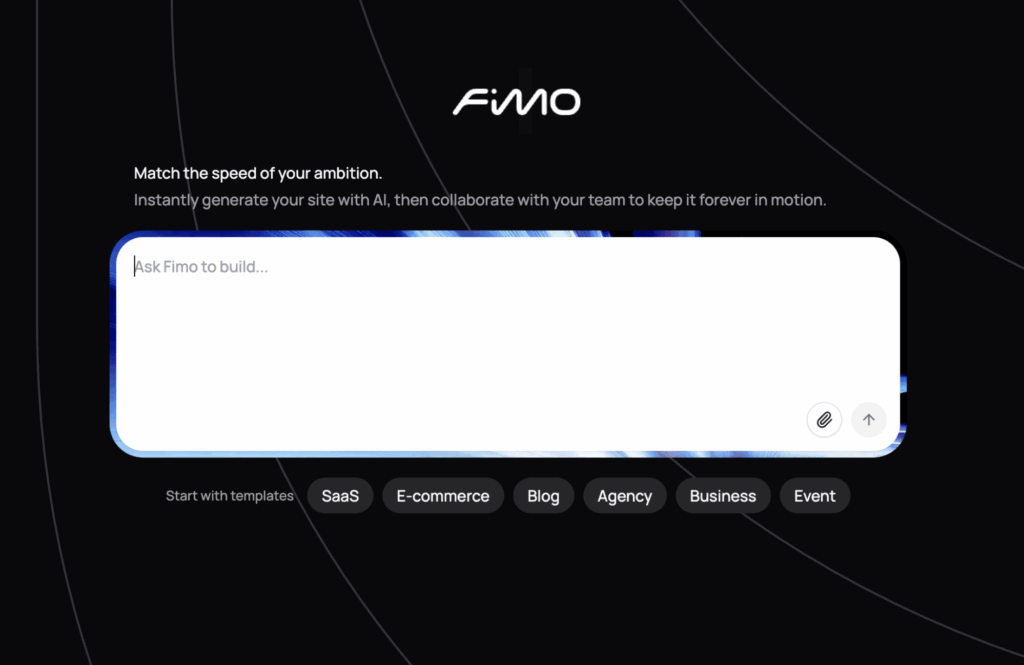
The good folks at Strapi just launched something exciting: Fimo.ai, an AI-native CMS built specifically for real websites. This team has experience (and opinions!) when it comes to building a headless CMS, so they designed Fimo around the workflows websites actually need: live visual editing, real-time collaboration, instant updates without deploys, safe experimentation with full rollback, and one-click global publishing. Only now, AI can do it for you.
Not your generic vibe-coding tool
Most AI website tools today are actually optimized for building apps vs websites. They might be great at generating components or spinning up demos, but once you ship a website and it becomes a living thing, your vibe-coding tool starts to struggle. Live websites need to be edited daily, touched by multiple people, localized, optimized, reviewed, and continuously updated while they’re already live. Could AI help with that experience as well?
It certainly can – that’s the gap Fimo is filling. Fimo is built as an AI-native CMS for real, live websites, not a codegen toy or a one-off page builder. It brings AI into the workflows websites actually depend on, instead of forcing teams to bend their process around a prompt.
The key difference vs most AI tools in the space is that Fimo assumes your website is already in production. It’s built for continuous iteration, real users, real content, and real teams. This is what that looks like in practice:
Fimo is designed for teams, not solo builders.
This is how CMSs work in practice. Bring editors, designers, and developers into the same AI workspace to collaborate in real time and keep your site moving without bottlenecks.
You can edit your site in real time, where it lives.
Fimo lets you update content directly on the page: you just open the site and edit each component in context. Click on any element to tweak layout, spacing, typography, or styles, or just ask AI to do it.
Experiments are safe by default.
One of the biggest advantages of using AI for building and editing is iteration speed, but that speed needs guardrails. In Fimo, every change is tracked, and you can roll back at any time, so your team can experiment without fear.
Full control when you need it.
We all need access to the source sometimes. When visual editing isn’t enough, you can still drop straight into code for custom components and advanced tweaks.
Using Neon to deliver a versioned website-building experience
To deliver safe iteration and instant rollback at the website level, Fimo needs a database that can keep up with constant change – and that’s Neon. Fimo runs an efficient setup that stays totally invisible to end users:
- It deploys one Neon database per Fimo app,
- with two branches per app: a dev branch for building and iteration, and a prod branch for live traffic.
- Fimo also uses snapshots for promotion and rollbacks
Why this works:
- In Neon, database provisioning is near-instant, which makes it practical to deploy a database per app instead of sharing a single, long-lived instance
- Thanks to scale-to-zero and its API-first design, operating fleets of thousands of Postgres databases is not only affordable on Neon, but feasible even for small teams
- Branching and snapshots provide the right primitives for versioning: they copy the full database state (data + schema) without interfering with other environments, making it possible to keep multiple versions live at the same time with minimal overhead, and to promote or roll back changes safely between them.
Try it
Fimo is live today: if you’re building or running a real website and want AI to help you move faster, it’s worth a look. Try it here: https://fimo.ai/
Building your own AI-native platform?
If you’re building an AI-powered CMS, codegen tool, or agent platform of your own, check out Neon’s Agent Plan to get access to special limits, pricing, and support.