




Thanks to Better Auth for partnering with Neon
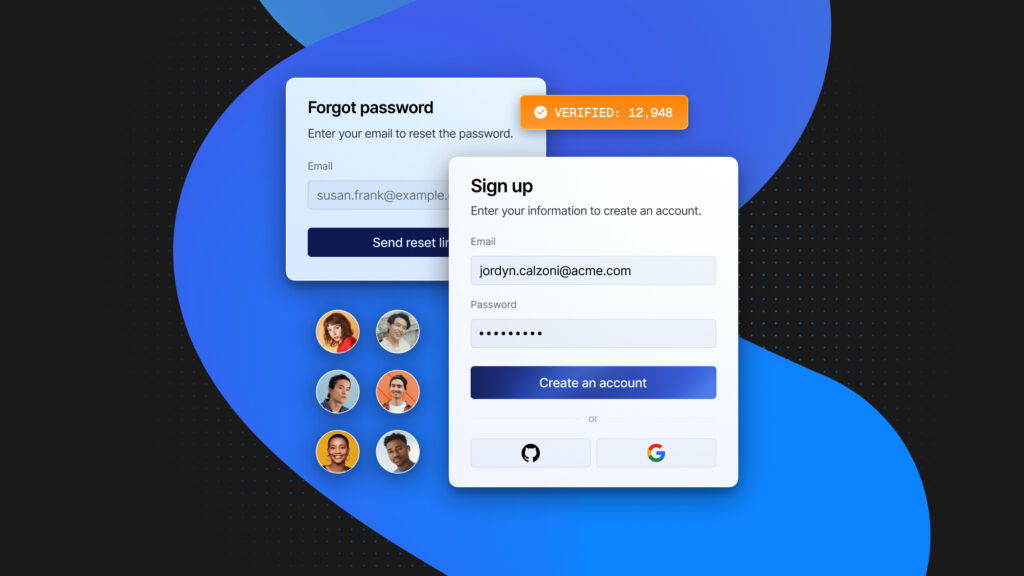
We just launched an architectural redesign of Neon Auth built on top of Better Auth’s tech. You can try it today in any Neon account, including the Free Plan.
Identity is one of those things that sits quietly at the center of most applications. You notice it more as your system grows. It affects permissions, data ownership, multi-tenancy, audit logs, and a good portion of your schema design. It becomes part of your runtime and part of your data model whether you planned for it or not.
Most teams only realize how foundational this is once their product evolves beyond simple login/logout. Identity ends up touching everything. And because of that, where it lives (and who owns it) matters far more than people assume.
What it actually means to own your auth
Owning your auth does not mean implementing cryptography by hand or rebuilding every protocol yourself. It means keeping the identity layer inside your architecture, close to the rest of the system that depends on it. The identity model, the user object, the relationships around it, and the logic that references it should all live where your data lives.
Almost every meaningful part of an application eventually touches the user model. Many early architectural decisions (both in the database and the codebase) come from how you structure that table and how you authenticate users in the first place.
When that model lives outside your database, you end up adopting someone else’s idea of what a user looks like. Relationships become harder to represent. The source of truth becomes unclear. You introduce boundaries between components that should work closely together.
The problems rarely appear as dramatic failures. They are quieter than that. A permission check that should be a join becomes a network request. A data-ownership rule that should be enforced in the schema becomes a sync job. Onboarding flows drift away from your actual business logic. You start shaping your system around constraints you didn’t choose.
These issues accumulate. They make the architecture heavier than it needs to be. Identity is too central to drift away from the part of the system that actually uses it.
The part of auth people overlook
People often misunderstand what makes auth difficult. Designing the flow itself usually isn’t the hard part, most engineers have logged into enough products to know what a reasonable onboarding or sign-in experience looks like.
The tricky part is the machinery behind it. Session management, verification logic, device handling, token rotation, security considerations, the hundreds of small decisions required to make authentication reliable. That is the part Better Auth handles.
But the identity model should still belong to you. It should live inside your database, evolve through your migrations, and integrate naturally with the rest of your architecture. Once identity is treated as part of your system instead of an external dependency, everything downstream starts to line up.
The importance of this becomes obvious when a product becomes genuinely multi-user. Suddenly the identity layer is carrying more weight. Teams, roles, multi-tenancy, auditability, platform-specific flows – these all force you to rethink the relationship between users and the rest of your system. They reveal how tightly identity is woven into your schema, your business logic, and your data model. And they highlight the limits of outsourcing that responsibility to a system that does not understand your product.
At this stage, owning your auth stops being an abstract architectural preference and becomes a practical requirement.
Bringing identity back where it belongs
Better Auth exists so that owning your auth does not mean rebuilding the entire stack by hand. It gives you a way to keep identity close within a framework that takes care of the complexity that makes authentication difficult in practice.
Neon is applying this philosophy to their platform. If your application already lives in Neon, Neon Auth gives you the same ownership of identity (your user model sits inside your database) while the underlying Better Auth code handles the machinery that makes authentication difficult. You keep the part that matters and let the system take care of the rest.
Whether you run Better Auth or use the version built into Neon, the core idea does not change. Your users belong inside your architecture, your auth should too.
“Owning your auth means keeping your user model inside your architecture. Neon users now get that ownership while letting Better Auth take care of the parts that make authentication hard” (Bereket Engida, creator of Better Auth)